World / Analysis
A year on Ukrainian forums: culture (part two of three)
From switching off Russian to a helmet at the Olympics: how Ukrainians online have argued over what counts as "ours"
On 6 August a front-end developer posted a long essay on DOU, Ukraine's largest IT community, under the title "Quiet capitulation". He had switched the language settings on his computer, browser and Google account to Ukrainian, yet websites kept speaking Russian to him. Around the thousandth time he switched, he wrote, it became easier to just read the Russian page than to hunt for the switch again: "That is the quiet capitulation." So he wrote an extension that makes websites use Ukrainian. By October the essay had 1,074 comments, ranging from browser language headers to whether "Russian-speaking Ukrainians" exist at all. It is a snapshot of the past year's cultural arguments on Ukrainian forums. From a song released during the blackouts and a misidentified flag to Eurovision, an Olympic helmet and a video game without Russian, users kept arguing over the same thing: what counts as "ours". We read a year of discussion on DOU, Reddit and the Toloka forum, checked it against Ukrainian and international reporting, and turned it into the second part of this three-part series: culture.
In this story
- A language map in the fifth year of war: home, law and "Kyiv Russian"
- "The internet keeps speaking Russian to me": a browser extension and a thousand comments
- The cost of switching off Russian: one company's books, and a "wrong flag"
- Where stars draw the line: a blackout song, Russian stages and "15 March 2014"
- Eurovision: one song, "Ridnym", heard two ways
- Helmets, games and streamers: who defines "politics" on the international stage
- Dubbing, old books and a file-sharing forum: "Ukrainisation" in everyday life
- What the mainstream media saw, and what the forums add
A language map in the fifth year of war: home, law and "Kyiv Russian"
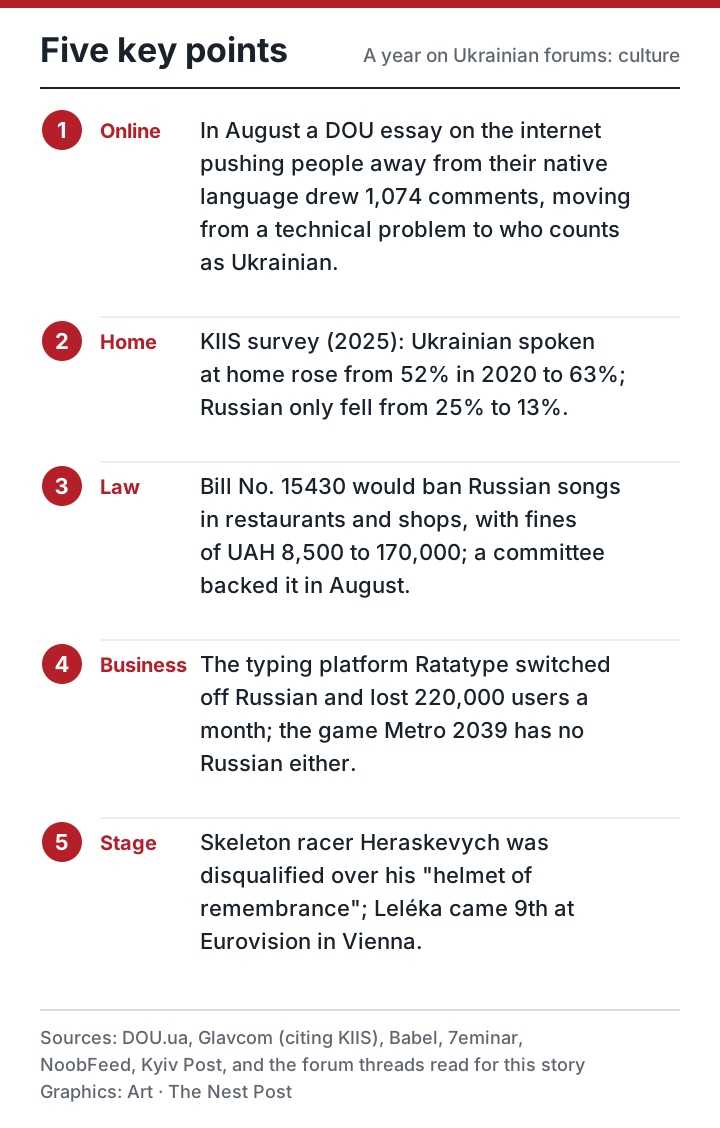
Start with the numbers. A survey published in 2025 by the Kyiv International Institute of Sociology (KIIS) found that the share of people who speak Ukrainian at home had risen from 52% in 2020 to 63%, while those who speak only Russian fell from 25% to 13%; the share who use both stayed roughly flat at about 19%. The biggest shifts came in the most Russian-speaking regions: in the south, Ukrainian at home rose from 22% to 39%, in the east from 17% to 29%. In the same survey, 58% said Russian should not be taught in schools at all.
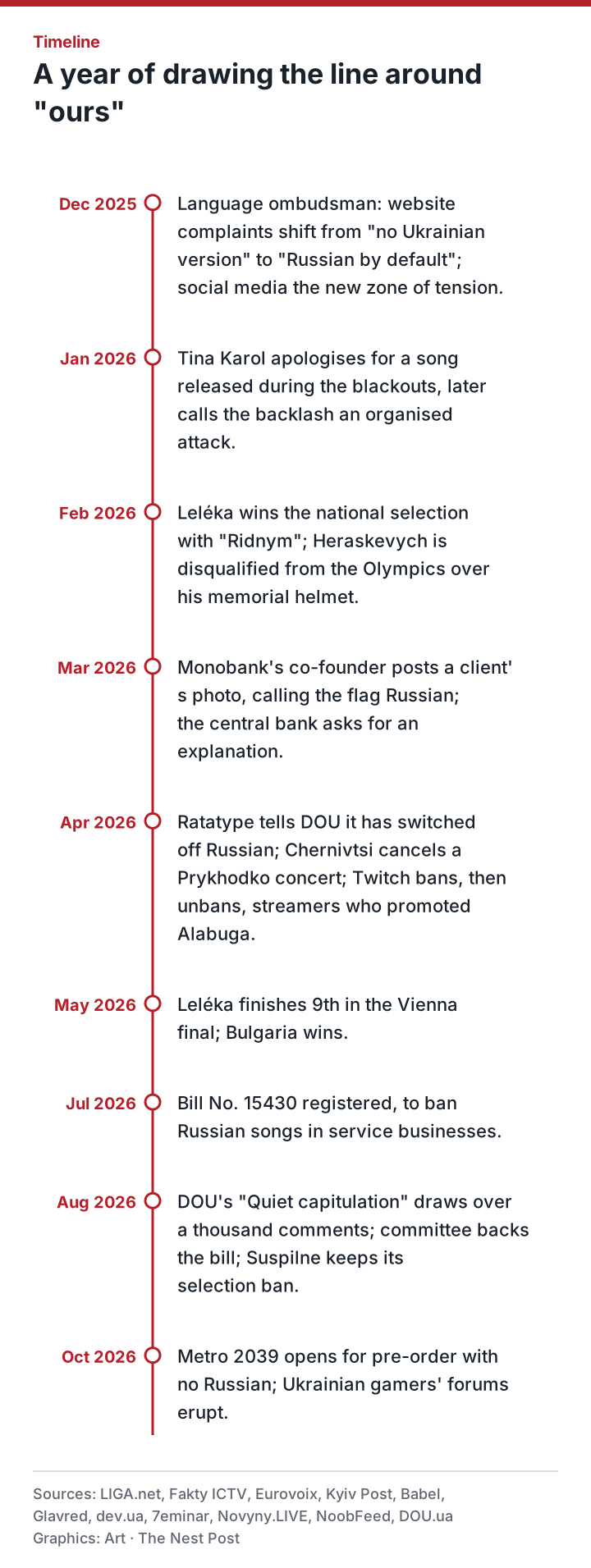
Language has moved from the home to the internet. In December 2025 Olena Ivanovska, the State Language Protection Commissioner (the language ombudsman), told a press conference that complaints about the language of websites had fallen from 46% of all complaints in 2022 to 25% in 2025. But the problem "has not disappeared, it has transformed": in 2022–23 about 80% of violations involved sites with no Ukrainian version at all, while in 2024–25 most complaints were about sites that load Russian by default even though a Ukrainian version exists. The new zone of language tension, she said, is social media.
The law is tightening too. In July 2026 Oleksandr Sanchenko, an MP from the ruling Servant of the People party, registered bill No. 15430, which would bar restaurants, cafés and other service businesses from playing Russian-language songs, with fines from UAH 8,500 to UAH 170,000. The explanatory note says the ban already exists, but the current fine of UAH 17 to 170 is symbolic. On 4 August parliament's committee on humanitarian and information policy recommended adopting it as a basis; under the draft, the language ombudsman could fine businesses without prior warning, and Russian songs could not be played even at a customer's request.
Pop culture feels the line first. In April the singer Anastasia Prykhodko wrote on Threads that she speaks "Kyiv Russian", and her concert planned for 5 May in the western city of Chernivtsi fell through: the venue declined to sign a contract, saying angry people had been tagging it on social media; her team called it a language "mini-scandal" and decided not to look for another venue. She then posted again: "For the especially excited: I also speak my native language — Ukrainian. Any questions?"
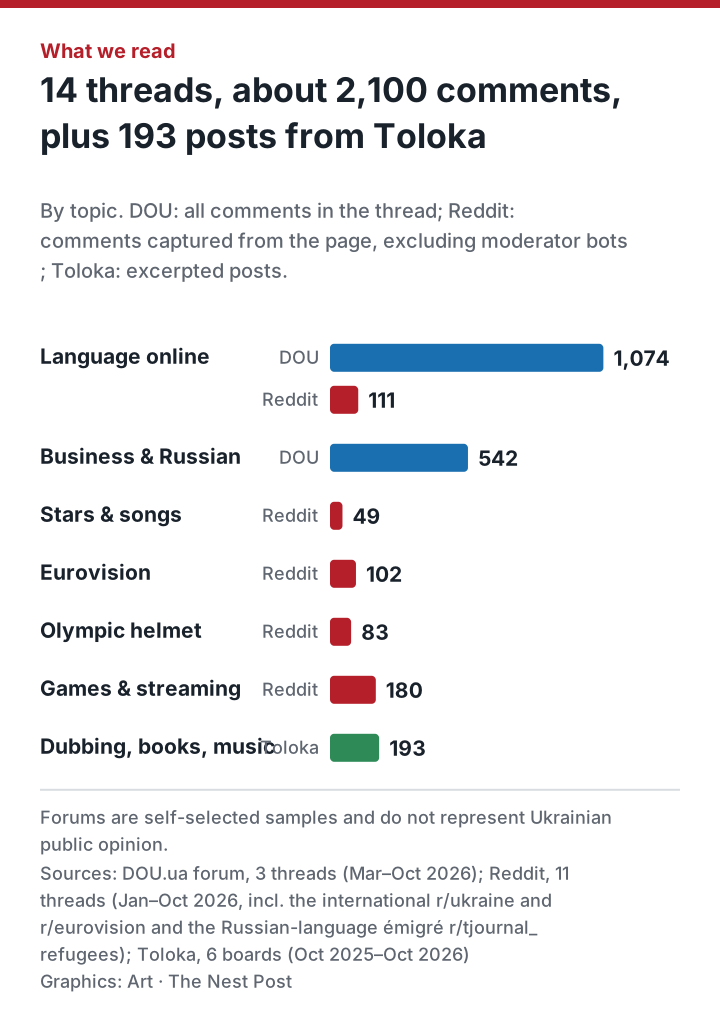
This is the second part of a three-part series, "A year on Ukrainian forums". The first part looked at daily life — conscription, emigration and bills. This one looks at culture: in a country where most people still speak two languages, one of them the aggressor's, what counts as "ours"? We read three threads on DOU, eleven on Reddit and excerpts from six boards of the Ukrainian file-sharing forum Toloka, from October 2025 to October 2026.
"The internet keeps speaking Russian to me": a browser extension and a thousand comments
On 6 August a front-end developer posted a long essay on DOU called "Quiet capitulation". He had switched every language setting on his system, browser and Google account to Ukrainian, yet websites and search results still served him Russian, sometimes even labelling Russian pages as Ukrainian. He explained the technical reasons: the browser's language preference is only a request, servers often guess by IP address, sites misdeclare their language in their markup, and language detectors, trained on far more Russian text, tend to read Cyrillic as Russian. His fix was an open-source extension he wrote himself, called Movar.
Перемикаю. Ще раз. І десь на тисячний раз стає простіше пробігтися очима по російськомовній сторінці, ніж вкотре шукати той перемикач.
I switch. Once more. And somewhere around the thousandth time it becomes easier to skim a Russian-language page than to look for that switch yet again.
This matches the trend the ombudsman described: most sites now have Ukrainian, the problem is the default. The comments began on technical ground — one user reported that after a week with the extension Russian sites stopped appearing in search, another that simple speech-recognition models hear Ukrainian as Russian. But the discussion soon turned to a different question.
проблема русскоязычного контента стоит только у тех, кто ее сознательно создает, либо у невротиков.
The problem of Russian-language content exists only for those who deliberately create it, or for neurotics.
Another user wrote in Ukrainian that the author was getting flak not for the Ukrainian language but for fighting "a non-existent problem"; scolding someone as unpatriotic for reading a borscht recipe in Russian, he argued, could "lose you a person loyal to Ukraine". Others thought the whole thing was badly timed:
Лять, в нас йде війна за збереження народу та державності, но це не заважає 1001 раз сперечатися за мову... Зараз це не найважливіше, будьте розумніше.
Damn, we're fighting a war to preserve the people and the state, but that doesn't stop us arguing about language for the 1001st time... This isn't the most important thing right now, be smarter.
The sharpest line in the thread came from an account that answered technical questions in the voice of Movar's developer. Replying to a Russian speaker who asked for "respect", he wrote:
В Україні є одна нація, українська. Ти або українець або чужинець. Немає поняття російськомовний українець.
In Ukraine there is one nation, the Ukrainian one. You are either Ukrainian or a foreigner. There is no such concept as a Russian-speaking Ukrainian.
Someone shot back at once: then what about the people who posted on this very forum in Russian before 2022? A user writing in English was more sardonic:
I thought the native language is the one you learned to talk on first, but it appears to be the one politically approved at the moment.
The thread was still drawing the odd comment in October, 1,074 in all — but from only 89 distinct accounts, with the five most active contributing about half. In the early hours of 9 August a moderator removed a batch of comments containing personal insults, and on 17 August deleted an entire branch that had become "a snowball of insults and complaints". One commenter summed up: the author had raised a technical problem with an open-source fix, an extension that "implements the user's own choice", and it had been taken as an attack.
AnalysisThe real dividing line in this argument is not "Ukrainians versus Russians" but runs between Ukrainians: on one side those who see language as identity, with no middle ground in wartime; on the other, Ukrainian citizens who grew up speaking Russian, or who think wartime is no time for new divisions. Both sides use slurs — hardliners call opponents "Little Russians", and some Russian speakers describe Ukrainian as pigs' and dogs' grunting. We describe these rather than quote them.
The cost of switching off Russian: one company's books, and a "wrong flag"
Four months before Movar, the marketing head of Ratatype, a touch-typing platform, opened her company's books on DOU. The platform, she wrote, has more than 6 million learners. In February 2022 it replaced the texts in its Russian-language typing tests with ones condemning the war; the site was then blocked by Russia's regulator and the company dropped its .ru domain, losing 220,000 users a month. At the start of 2026 it also removed the Russian-language courses still used by people in Ukraine, Kazakhstan and elsewhere. Advertising income and users fell, "but what we got instead was total satisfaction".
Тож від початку цього року вимкнули і цю історію. Викосили російськомовний курс, тест, контент — все. Нічого російського на сайті.
So from the start of this year we switched that off too. Mowed down the Russian-language course, test, content — everything. Nothing Russian on the site.
Most top-level comments were thanks, but the longest discussion among the thread's 260 comments grew from one dissenting voice. A user from an occupied city in the south, now living in Germany, wrote that he had grown up in Russian-language schools and thinks in Russian:
І ми всі не погані раз розмовляємо на російській, ми ті хто загубив все що мав.
And we're not all bad just because we speak Russian; we are those who lost everything we had.
He said half an hour of speaking Ukrainian left him exhausted, and asked: if Russian is the occupier's language, isn't German one too? The replies ranged from mild to harsh. One said nobody forces you to learn it, but in Ukraine nobody has to adjust to you either, and that public services defaulting to the state language is common in Europe; another, who had also grown up speaking Russian, said the tiredness goes away with practice. Others replied bluntly:
Ви українець і ваша рідна мова українська, так само як у поляка рідна мова польська — інакше він не поляк
You are Ukrainian and your native language is Ukrainian, just as a Pole's native language is Polish — otherwise he's not a Pole.
Criticism came from the other direction too. Some mocked the move as shooting yourself in the foot and calling it a victory; one said it came four years late; a user writing in Russian only wanted to know how quickly traffic came back. On 7 April, the busiest day of that reply chain, Russian-language comments even outnumbered Ukrainian ones.
Another row in March showed how quickly something that "looks Russian" can explode. On 9 March Oleh Horokhovskyi, co-founder of the digital bank Monobank, posted on Threads a photo of a client taken during video verification, with a flag resembling the Russian one behind her, plus a joke. The client said she was abroad and that it was the flag of Slovenia. Horokhovskyi at first insisted it was Russian and wrote that "supporters of Russian peace in Ukraine will not have any protection of personal data". The National Bank of Ukraine asked the bank for an explanation.
On 26 March the National Bank governor, Andriy Pyshnyi, told parliament he understood the "overly emotional reaction to the Russian tricolour", but that any response must stay within the law; the parliamentary human rights commissioner, Dmytro Lubinets, opened his own inquiry. Horokhovskyi later admitted his mistake, saying he had acted emotionally. On DOU, a user who said he works on identity verification at Revolut wrote a critical post; most of its 282 comments were about personal data and banking secrecy, but some named the layer beneath, language and identity:
він просто хайпував, тому що такий запит у суспільства, шукати ворогів (не тією мовою розмовляє, не ту музику слухає, не ті книжки читає) і дружно пинати.
He was just chasing hype, because that's what society demands: find enemies (speaks the wrong language, listens to the wrong music, reads the wrong books) and kick them together.
Others took the opposite view: even if he got it wrong, "there must be no tolerance for Russia"; one commenter reposted a post by Tymofiy Mylovanov arguing that Russian colours are a provocation and a leader has no right to "wait it out".
Where stars draw the line: a blackout song, Russian stages and "15 March 2014"
In January, amid widespread blackouts, the singer Tina Karol posted a song, "We have no light". Its lyrics are about having no power, no heating and no water, but "we still have each other". Many listeners felt mocked; some claimed it had been commissioned by the government. On 20 January she apologised on video, saying the song had been written in 2022 by a composer for his own wedding and that she had wanted to unite people with the clip, "but I united everyone against me". Ten days later she said it had been an organised attack: "there can't be 400 comments an hour under a video", calling it "part of the hybrid war".
The discussion on the Ukrainian-language r/reddit_ukr fell between those two readings. Many felt celebrities are out of touch with ordinary hardship:
Ну від людини яка не відчуває всіх цих проблем, може спокійно жити своє найкраще життя будь де, така пісня звучить як знущання)
Coming from someone who doesn't feel any of these problems and can calmly live their best life anywhere, a song like that sounds like mockery.
Немає світла бо русня обстрілює енергетичну інфраструктуру — 👎
Немає світла бо депутати вкрали бабло — 👍
No power because the Russians are shelling energy infrastructure — thumbs down. No power because MPs stole the cash — thumbs up.
Another case is the singer Olya Polyakova. The national selection for Eurovision run by the public broadcaster Suspilne excludes performers who have performed in Russia or occupied territory after 15 March 2014; for that reason she was barred from the selection, and in March she protested before a parliamentary inquiry committee. On 29 July she wrote again asking for the rule to be changed; Suspilne replied that it stands unchanged, adding that the 2026 selection drew 392 applications and that polling shows 56% of Ukrainians support the ban.
That same summer she filmed a short video with a Russian musician at a festival in Jūrmala, Latvia; after the organisers posted it on social media it drew criticism and was taken down. In an interview she said she had not known the man's background at the time, and asked whether she should apologise to the people. On r/RedditUATalks, someone immediately turned to the president:
Президента, який виступав на Росії і окупованих територіях обирати можна, а виступати на Євробаченні - ні. Подвійні стандарти
A president who performed in Russia and the occupied territories can be elected, but performing at Eurovision — no. Double standards.
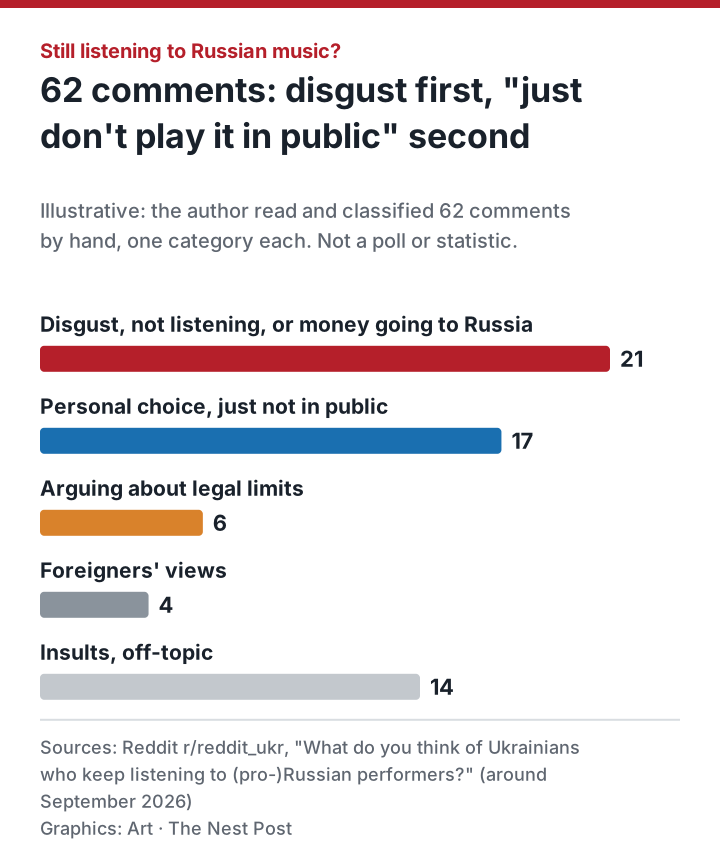
The everyday version is "people who still listen to Russian music". In September a poll-style post on r/reddit_ukr asked what users think of Ukrainians who still listen to (pro-)Russian performers. We classified 62 comments one by one: the largest group expressed disgust, refused to listen or worried about money flowing to Russia (21); next came "personal choice, as long as you don't play it in public" (17); 6 argued over the legal limits and 4 came from foreigners.
Так парадокс у тому що у Ані Лорак та Таїсії Повалій є багато пісень українською. І так, слухаючи пісні українською, виходить, що гроші йдуть цим виконавицям які живуть на росії і платять податки з яких нас обстрілюють.
The paradox is that Ani Lorak and Taisiya Povaliy have lots of songs in Ukrainian. So by listening to songs in Ukrainian, the money goes to these performers who live in Russia and pay taxes that are used to shell us.
Мені байдуже, яку музику людина слухає, Я й сам слухаю таку музику, тому не бачу сенсу когось за це засуджувати. Головне, щоб її не вмикали на колонці так, щоб це чули всі навколо.
I don't care what music a person listens to, I listen to such music myself, so I see no point condemning anyone for it. The main thing is not to play it on a speaker so everyone around hears it.
Playing in public is exactly what bill No. 15430 targets. Users disagreed about the current rules: some said only public playing is banned and nobody cares what you play in private; others that being overheard in your car can count as "public"; others cited Article 10 of the constitution, saying it also protects Russian and minority languages. These are users' readings; we have not checked them against the statutes.
Eurovision: one song, "Ridnym", heard two ways
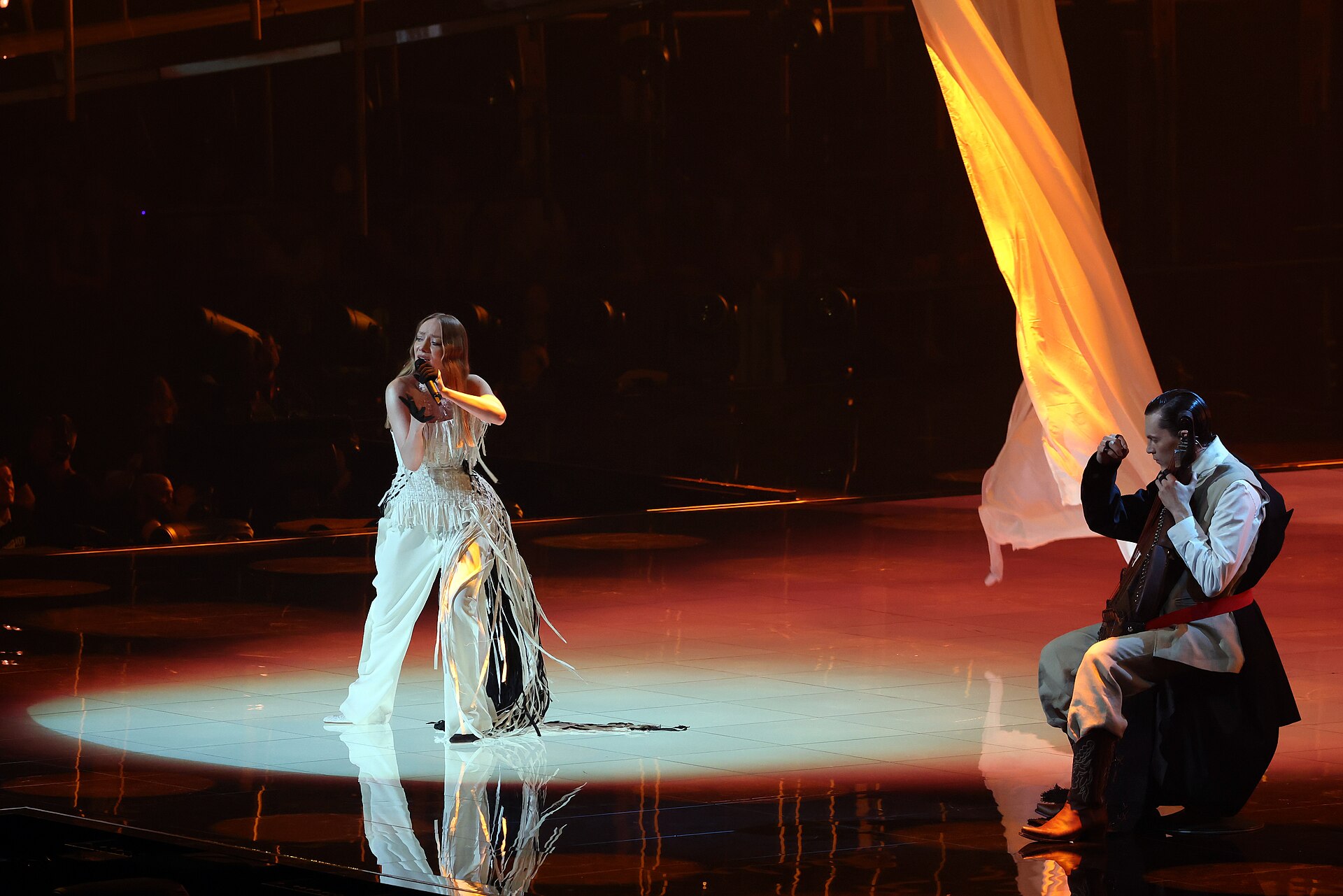
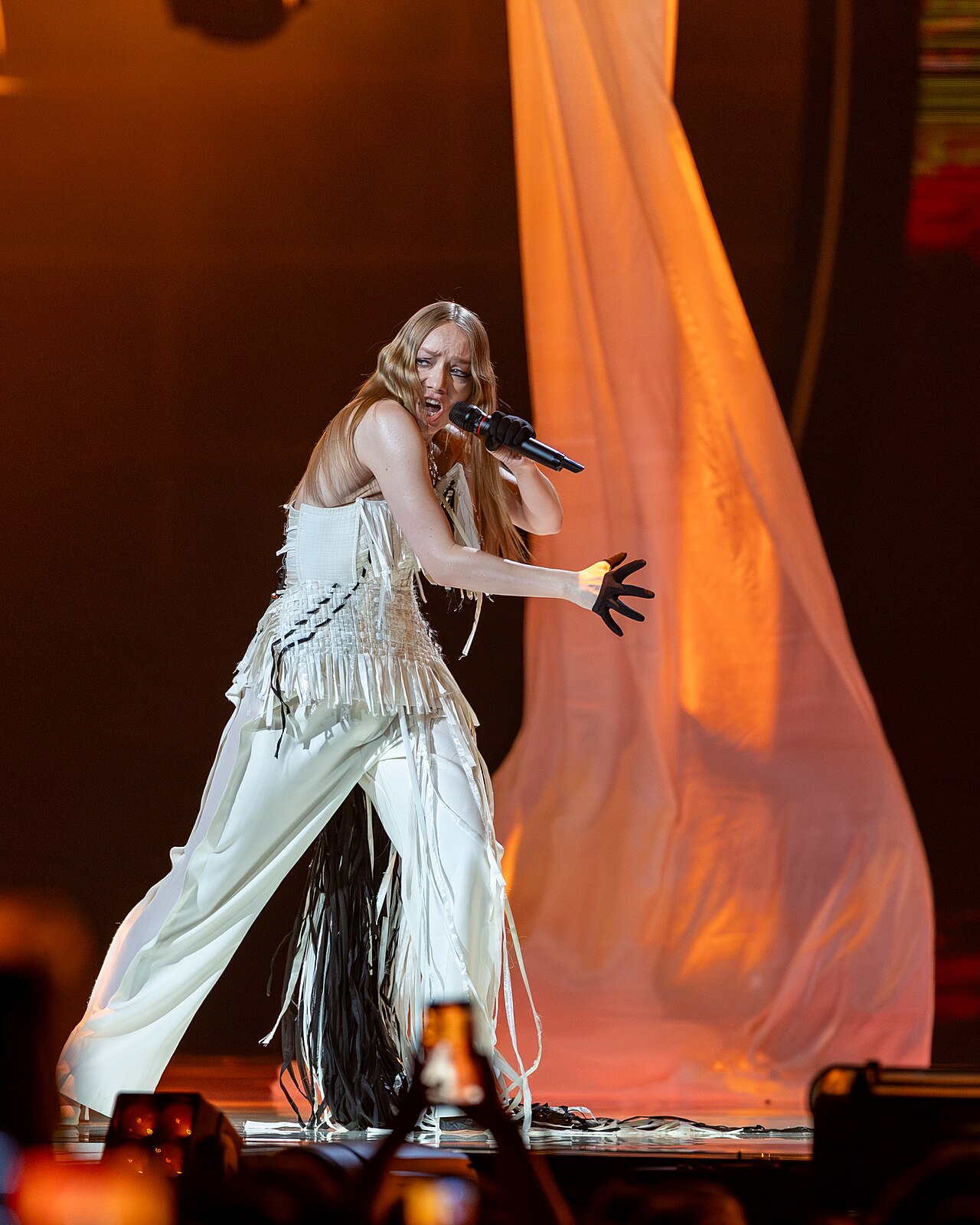
On 7 February the singer Leléka won Ukraine's national selection with "Ridnym" (roughly, "To my own"). Ten acts competed in the final, decided half by jury and half by public vote, with the 2016 Eurovision winner Jamala as the selection's music producer. In Vienna in May, Bulgaria's DARA won with "Bangaranga" on 516 points; Leléka finished 9th with 221 points.
Before the selection, discussion on the international English-language r/eurovision was mostly about the songs and the odds; most users there are not Ukrainian. One who said they were Ukrainian pointed out that the song is heard differently at home and abroad:
This is an international subreddit, and internationally, as I've noticed, Leleka is hardly considered the winner of the Vidbir.
Another wrote that people hear in the song "a much needed hope and light". The Ukrainian-language discussion barely touched the music. Part of the selection vote takes place in Diia, the government's digital-services app; on r/reddit_ukr people complained about being spammed with notifications, and joked that not voting would get their bank cards frozen. One user said they had interviewed the Diia team as part of a course:
В результаті інтерв'ю ми зрозуміли, що голосування за Євробачення це послуга з найвищім енгейджментом від юзерів.
From the interview we realised that voting for Eurovision is the service with the highest user engagement.
In the same thread someone said the money would be better spent on engineers, and another replied: how can anyone still not understand how important culture is? Sharper still was an r/CringedIn thread mocking a LinkedIn post whose author complained that people were celebrating Eurovision while the country had no power. Most commenters laughed at him, but some defended him:
Цей пан платить вам зарплати та постачає обладнання. Навіщо знецінювати його проблеми? Чи не росії вігідно щоб українці один з одним сварилися замість підтримки?
This man pays your salaries and supplies equipment. Why devalue his problems? Isn't it in Russia's interest for Ukrainians to quarrel with each other instead of supporting each other?
AnalysisIn wartime, whether one may enjoy oneself is itself a cultural question. One user proposed having it both ways: Ukraine's performer could go on stage, switch off all the lights and stay silent for four minutes, to remind Europeans of the blackouts.
Helmets, games and streamers: who defines "politics" on the international stage
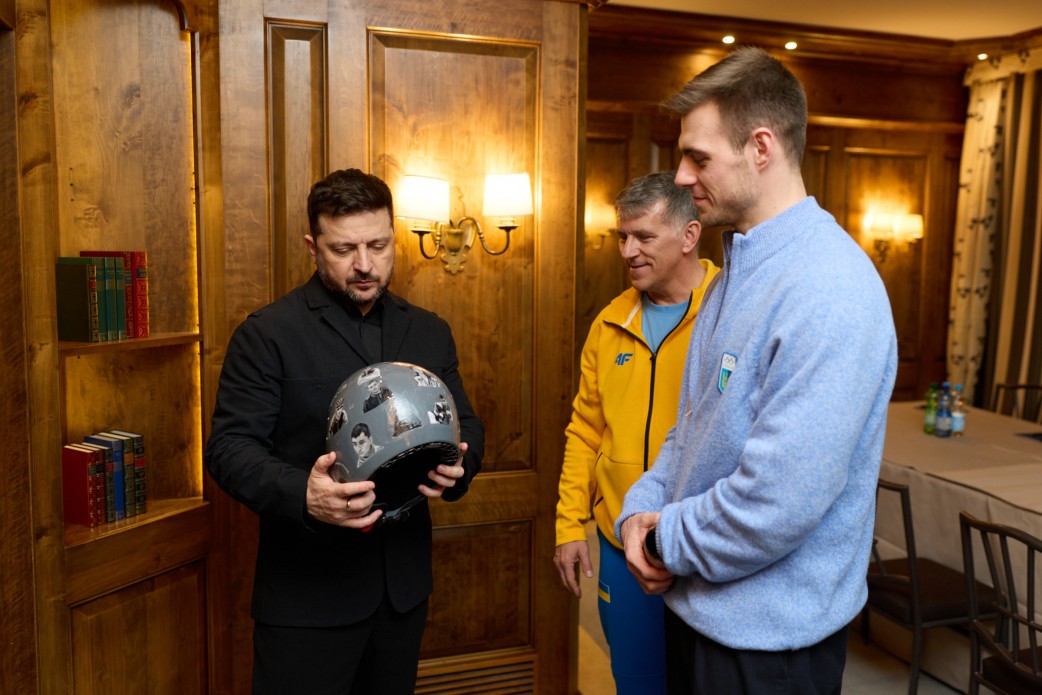
On 12 February, before the men's skeleton at the Milano Cortina Winter Olympics, 27-year-old Vladyslav Heraskevych, one of Ukraine's flag bearers, was disqualified. He had insisted on racing in a "helmet of remembrance" bearing portraits of more than 20 Ukrainian athletes killed in the war; the IOC said he had failed to follow its athlete expression guidelines, and offered him a black armband for the race with the helmet to be shown afterwards in the mixed zone, which he refused. NBC reported he had been considered a legitimate medal contender. The next day a sole arbitrator of the Court of Arbitration for Sport dismissed his appeal, saying she was "fully sympathetic" to his commemoration but siding with the IOC rule that bars expression on the field of play. President Zelensky awarded him the Order of Liberty.
His response on X was a single line: "This is the price of our dignity." On Reddit the busiest discussion was on the international English-language r/ukraine, where 83 comments were almost uniformly hostile to the IOC — but most posters there are not Ukrainian; one introduced himself as German, and others brought up Taiwan:
So many terrible decisions, like allowing Russian athletes to compete, forcing Taiwan to join under a different name, and now banning a Ukranian athlete.
The war is political. Memorializing athletes who have passed away isn't. His act isn't the political one.
A few contrarians claimed he was never going to win a medal and was seeking attention, which NBC's reporting contradicts. Someone else suggested Ukraine, Taiwan and their friends "create our own Olympics games".
In gaming the argument ran the other way: this time it was the developers who chose to leave Russian out. When Metro 2039, developed by 4A Games, went up for pre-order, the publisher's language list did not include Russian, not even subtitles, although the story returns to Moscow; the developer has said Russia's invasion shaped the game's direction. The gaming site NoobFeed covered it from the angle of Russian-speaking fans losing their language. On r/UA_Gamers, the thread starter said the game was made by a Ukrainian studio and a Russian release would be inappropriate; across two threads of about 130 comments the tone was mockery of "the Russians whining again", but opinion was not uniform.
В цій грі має бути руснява локалізація. Це як вирізати з Wolfenstein німецьку мову у нацистів, ну це ж брєд, нє?
This game should have a Russian localisation. It's like cutting German from the Nazis in Wolfenstein — that's nonsense, no?
ІМХО оптимально було б якби в грі головний герой і дружні до нього персонажі та фракції говорили українською, а вороги — російською.
IMHO the optimum would be if the protagonist and the characters and factions friendly to him spoke Ukrainian, and the enemies Russian.
Поясніть, неіронічно, в чому сенс не продавати їм іграшки? Якщо росіяни мають змогу оплатити будь-яку гру, то чому не напарити їм все по максимуму і забрати гроші, а не лулзи ловити з коментарів?
Explain, non-ironically, what's the point of not selling them games? If Russians can pay for any game, why not milk them to the max and take the money, instead of catching lulz from the comments?
One reply said separating Ukrainian from Russian culture matters more than a handful of money; another suggested making a Russian version and publicly donating the revenue to the Ukrainian army. Some noticed that the "Western gamers" complaining about the missing Russian on international game forums looked like Russian accounts with inflated karma — a judgement by users that we cannot verify.
A streaming row at the end of April showed that international platforms do not always draw the line where Ukraine would like. Twitch blocked a group of Russian streamers who had broadcast an esports tournament run by Alabuga Polytechnic and advertised the college; Alabuga is the Russian economic zone where Shahed attack drones are assembled. Ukraine's youth and sports ministry thanked Twitch publicly on 29 April, but Twitch reinstated the accounts almost immediately. On Reddit the liveliest discussion was on r/tjournal_refugees, a Russian-language émigré community, where commenters mostly mocked Twitch — and the excuses made for the streamers:
Бедные росияне. Кругом их "надули, нагло обманули, заставили, просто вынудили".
Poor Russians. Everywhere they are being "conned, brazenly deceived, forced, simply compelled".
Dubbing, old books and a file-sharing forum: "Ukrainisation" in everyday life
Compared with Reddit and DOU, Toloka is quiet. It is a Ukrainian file-sharing forum, and on its film, series and book boards people care about who does the dubbing. A promotional video for Amazon's new Stargate series already came with an AI-dubbed Ukrainian track; a third Ukrainian dub of the first Shrek was on its way, and while one user wondered why, another guessed the rights had changed hands and the old dub had not been kept.
Even dubbing history is contested. When one user wrote that official Ukrainian dubbing began with Cars twenty years ago, another shot back:
Може досить повторювати дурниці невігласів, котрі вважають, що усе почалося саме з них, єдиних і неповторних?
Can we stop repeating the nonsense of ignoramuses who think everything began with them, the one and only?
AnalysisHe listed earlier Ukrainian dubs and said Cars had merely resumed the process after a 15-year break. The original poster replied that of course he knew; he had written it that way because "our society believes" it. In a country that treats language as a line of defence, even the year "our dubbing" began is part of identity.
Paid platforms are measured by the same yardstick. One user complained that the second season of a series was available only behind a paywall and that the Ukrainian studio's dub had been "forgotten", in effect pushing viewers to the Russian version — which he referred to with a slur. Another accused a user of advertising for the Russians again merely for mentioning a new season not yet uploaded to Ukrainian sites.
On the literature board the argument was about the writer Mikhail Bulgakov. When someone shared an interview headlined "Don't give Bulgakov away to Russia", one user replied:
Це все одно, що під час епідемії чуми волати: «Не віддавати бліх пацюкам!»
It's like shouting during a plague epidemic: "Don't give the fleas away to the rats!"
Others pointed to the conditions for reading at all. When a news item said 45% of Ukrainians had read more than three books last year, one user replied that not everyone is lucky enough to live in the west, where there is almost no war, and read to their heart's content.
What the mainstream media saw, and what the forums add
Different outlets saw different things in the same events. US networks covering the helmet focused on IOC rules and procedure: NBC on the decision of the bobsleigh federation's jury and the appeal, CNN on the arbitrator's sympathy and dismissal; the Kyiv Post headlined his words "the price of our dignity" and quoted the foreign minister calling it "a moment of shame". Ukrainian regulatory media covering bill No. 15430 focused on the fine bands and how businesses should change their playlists; entertainment outlets covering Polyakova, Karol and Prykhodko mostly centred on the stars' own responses.
AnalysisThe forums add a layer that this coverage rarely shows: the people arguing are mostly Ukrainians. On DOU, those who objected to Ratatype or to Movar were not Russians but Ukrainian citizens who grew up speaking Russian, or who think wartime is no time for division; on r/UA_Gamers, those who wanted a Russian version argued the money could go to the army. On the international English-language subs, meanwhile, Ukraine's affairs were often placed in a bigger frame, such as the IOC and Taiwan.
AnalysisThere is also a gap with the polling. KIIS data show more people speaking Ukrainian and fewer supporting Russian in schools; yet the fiercest arguments on the forums were often not about whether to speak Ukrainian, but about how far to tolerate those who still speak Russian, and who should enforce it — the ombudsman, venues, platforms or other users. Our sample cannot say how widespread this tension is in society.
On 13 October the newest comment in the "Quiet capitulation" thread was written in Russian. Its author said Google and Reddit still redirect him from English originals to Russian machine translations, even though there is no Russian anywhere in his searches or browser settings:
Не отношусь негативно к русскому языку, но я хочу получать доступ к нормальной информации, а не вот это вот всё. Что уже говорить про тех, кто испытывает негатив к русскому — представляю каково им.
I have nothing against the Russian language, but I want access to proper information, not all this. Not to mention those who feel negatively about Russian — I can imagine how it is for them.
More than two months after the thread began, that language switch is still there. In the last part of the series we will look at how Ukrainians online talk about international politics.
Subscribe to the newsletter from The Nest Post
One email each time an in-depth story is published, with the key points and any corrections. No advertising; unsubscribe at any time.